Share this post
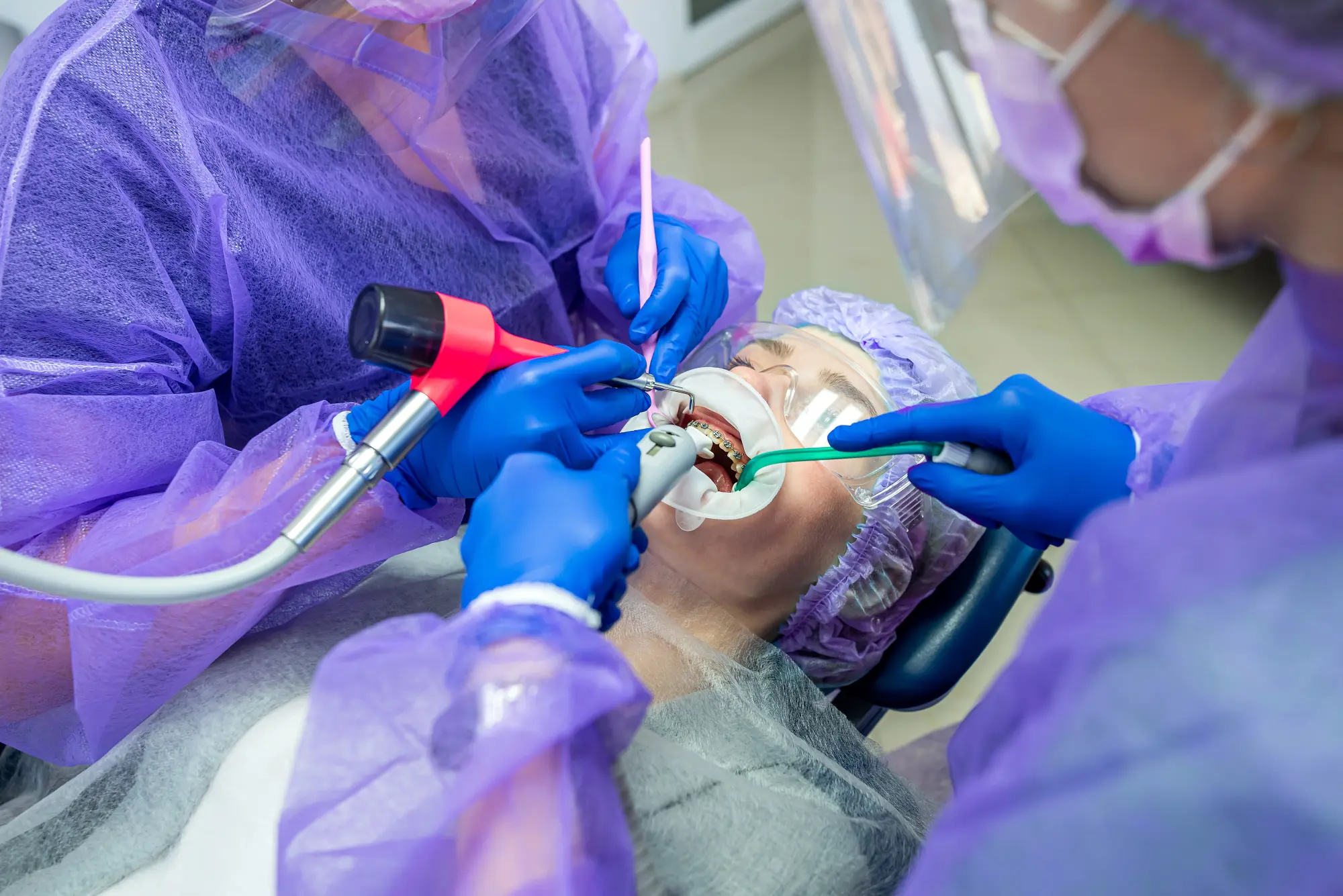
Picture a dentist who has spent 20 or 30 years caring for the same families. They aren't ready to retire, and they aren't burned out on dentistry. Then a landlord mentions that the building is going to be reclaimed, or the lease is coming up with no good renewal terms. Suddenly a practice that took decades to build feels like it's on shaky ground.
We see this scenario often at Western Practice Sales, and the first instinct is usually the same: find a new space and start over. For many doctors, a merger is the better answer. It can preserve patient relationships, protect the value you've built, and open the door to real growth. A merger doesn't have to mean the end of your career. Sometimes it's the smartest next chapter.
Our team at Western Practice Sales, based in Auburn, CA, has spent decades guiding dentists through transitions of every kind. Phill Hoover brings more than two decades of experience in the dental transitions market and a deep background in dental financing. Dr. Michael Weis has been an associate, a practice owner, a buyer, and a seller, and now helps dentists across California navigate their own transitions. Together, we want to walk you through why a merger can beat a move.
Practice Transitions Are Not One-Size-Fits-All
For a long time, the story of a dental practice transition was simple. A doctor reached a certain point in their career, decided they were ready to hang it up, and sold the practice. That path still works for plenty of dentists, but it is no longer the only one.
Today, transitions take many forms. Some doctors want to keep practicing and keep seeing the patients they've cared for over the past ten, twenty, or thirty years. They simply want a strategy that lets them do that without carrying every responsibility of ownership. That is where hybrid approaches come in.
One option is to bring on an associate who may eventually want to transition into ownership. This arrangement lets the founding doctor continue treating patients while mentoring and guiding a younger dentist. In other cases, the associate is an experienced doctor who just wants to work part-time and has no interest in taking over. Both are perfectly valid. There is no single formula for a merger or acquisition, and the right structure depends on what you want your career and your practice to look like.
The doctors who get the best outcomes are the ones who define their goals first and then build the structure around them. A good transition partner helps you map out those options, so you aren't forced into a path that doesn't fit.
What a Dental Practice Merger Actually Looks Like
When people hear "merger," they often picture two large corporations combining. In dentistry, the reality is more personal and more flexible.
One of the biggest developments we're seeing in practice transitions is the rise of patient chart sales and growth through patient acquisition. For a mid-career dentist looking to build, absorbing the patient base of a nearby practice can be a faster and more reliable route to growth than traditional marketing alone. For the doctor on the other side, it means their patients move into capable, caring hands.
This works across a range of practice sizes. Practices with revenue anywhere from a few hundred thousand dollars to a million dollars can be absorbed by a growing practice that is looking for exactly that kind of opportunity. The trick is knowing who those potential partners are, and that is where relationships matter. Our brokers are out in the market every day. We know which doctors are looking to expand, which groups are acquiring, and which fit would be right for your practice culture and your patients.
For the buyer or merging doctor, the benefit is clear: an established patient base, an experienced team, and an existing location. For the seller, the benefit is continuity. Patients you've known for decades don't have to scramble to find a new dentist, and your legacy continues.
When Your Lease Forces the Question
Leases are one of the most common pressure points we see here in California. When a lease nears expiration, landlords may decide to reclaim the building or raise terms significantly. A mid-career dentist who suddenly faces that situation has a hard decision to make. Do you relocate, rebuild, and hope your patients follow? Or do you look at a different path?
Relocation sounds simple, but it carries real costs and real risk. You face build-out expenses, downtime, and the possibility that some patients won't make the move. A merger can sidestep much of that. By joining forces with a nearby practice, you can keep your patients in the care of a doctor you trust, often without interrupting their treatment at all.
The challenge is that many doctors in this position simply don't know where to start. They don't know who might be interested or what their practice is worth to a potential partner. This is where working with a Western Practice Sales broker makes a difference. Our team is plugged into the relationships that matter, so when a lease issue comes up, we can quickly identify practices that might be a strong match.
The most important piece of advice we can give is to start early. If you can see a lease issue on the horizon, talk to a dental transition professional before you're backed into a corner. More time means more options, and more options usually means a better result.
Is Your Practice an Asset or a Job?
Here is a question we encourage every dentist to ask honestly: is your practice an asset, or has it become a job?
An asset grows and improves with time. A job is something you show up to, perform the same work, and collect the same paycheck. Both can be valuable to you personally, but only one holds long-term value for a buyer or merging partner. Doctors can always find jobs. Doctors buy assets. If you plan to sell or merge, you want to be offering an asset.
One sign we watch for is the phone call that starts with a doctor asking how fast we can sell their practice. Very often, that call isn't really about selling. It's a sign of burnout. The practice has slipped into feeling like a grind, and the joy that once drove the doctor has faded. In those cases, the right answer may not be an immediate sale at all. Sometimes the better move is to bring in resources, consultants, or a strategic partner to help the practice find its momentum again.
Asset growth also isn't limited to revenue. It can mean increasing cash flow, which is a different measure from revenue. It can mean investing in the business by adding operators, even if you aren't using all of them yet, so the space is ready for the next doctor. It can mean adding technology like a CBCT. It can mean buying the real estate. Younger buyers look for these signals, and a practice with a clear growth story is far more attractive than one with a flat history.
Why Real Estate Strengthens Any Transition
Of all the investments a dentist can make, commercial real estate is one of the strongest, especially in the California market. Most dentists lease their space, and that's perfectly normal. But a doctor who owns the real estate has a real advantage, both for their own flexibility and for the value a buyer sees.
With a lease, you are often limited in what you can modify, and terms can shift year to year. With ownership, you can adapt, expand, and reshape the space as your practice evolves, without asking anyone's permission. That freedom is a form of growth in itself.
For buyers, owning the building alongside the practice often makes financial sense. A lease payment and a mortgage payment tend to be comparable, but a mortgage is an investment back into yourself and your business rather than a payment toward someone else's equity. Lenders also like real estate because it is a hard asset with market value beyond dentistry. In many cases, financing for the building can be quite flexible, and with the cash flow of a strong practice, buyers may have more options for the down payment than they expect. They may not need to put up the traditional chunk of their own savings.
From the seller's perspective, selling the building at the time of the practice sale is often very beneficial. We regularly hear from buyers who are not interested in a practice that doesn't include real estate. Sellers worried about the tax impact of selling a commercial property also have strategies to explore, such as a 1031 exchange. These situations have a lot of nuance, which is why working with someone who has navigated them many times is so valuable.
Plan Early: Taxes and Timing
Taxes come up in nearly every conversation we have with sellers. It's natural to wonder what you will owe. The answer is different for everyone, but there are a few general points worth knowing.
A typical dental sale allocates the bulk of the value to goodwill and a smaller portion to physical assets, and these are taxed differently. Capital gains and ordinary income both come into play, and both generally come due at closing or by the end of that tax year. Every doctor's bracket and situation is unique, so there's no universal formula.
What we can say is that the doctors who get caught off guard are usually the ones who decide to sell in a hurry. When you plan three to five years ahead with your dental CPA and a transition specialist, you gain room to be strategic. In some cases, smart investments in the business can make it more attractive to buyers while also providing a meaningful benefit at the time of sale. It's much easier to make those moves with time on your side.
Lean Into the Experts
A merger can be one of the most powerful tools available to a dentist who wants to keep growing, keep serving patients, and protect what they've built. Whether you're facing a lease expiration, wondering if your practice is still an asset, thinking about real estate, or simply curious about what your options are, the most valuable step is to talk to someone who has done this before.
At Western Practice Sales, we bring 47 years of dental transition experience to the table. Our team has completed more than 2,000 dental transitions, and our financing background includes more than $500 million in dental transitions funded. We combine broker expertise, MBA and lending knowledge, and the perspective of a doctor who has been an associate, an owner, a buyer, and a seller. We believe every transition, whether you're a buyer or a seller, deserves a guide who genuinely cares about the outcome.
If you're a dentist in California thinking about what's next, we'd love to hear from you. Call us at (800) 641-4179 or visit westernpracticesales.com to start the conversation. Whether you're two years or ten years from a decision, early planning gives you the most options. Let us help you find the path that fits your goals, your patients, and your future.
Share this post
Explore more blogs
How Is Asset Allocation Structured in a Dental Practice Sale for Taxes?
If you're thinking about selling your dental practice, there's one thing we can say with confidence: taxes will be part of the picture.
The Mid-Career Audit: Is Your Practice an Asset or a Job?
It usually starts with a phone call. Sometimes it comes on a Monday, sometimes a Tuesday, and the day hardly matters.
California Practice Real Estate: Lease vs. Ownership in a Dental Practice Transition
Ask any dentist what they wish they had thought about sooner, and many will say the building.